
Part of our series: "What to Expect Before, During, and After Your Clean Energy Upgrade"
Replacing your gas furnace, oil heater, aging air conditioner, baseboards, etc. with a modern heat pump gives you efficient heating and cooling in one quiet system, with greater comfort than you've previously had and typically lower utility bills.
BEFORE: Strategizing your upgrade (a few weeks to months)
1. Consult your QuitCarbon Clean Energy Coach (ideally days to months in advance). The earlier you start exploring a heat pump upgrade, the more opportunity exists for QuitCarbon to find you the best rebates, the ideal systems, the right contractor and more. It is never too early to contact QuitCarbon!
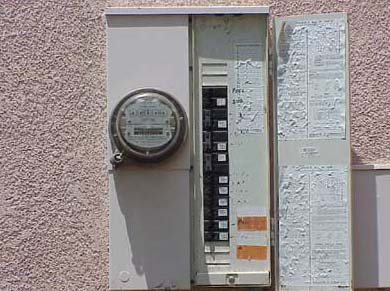 2. Add details to your QuitCarbon Home Profile before you connect with a Contractor (a few days). Photos of your old heating system, air conditioner (if you have one), electrical panel, ducts (in attic, crawlspace, or basement, if you have ducts) help QuitCarbon give you the best advice, and help contractors better serve your needs. Take note of any rooms that are too hot or too cold, and be ready to point these out when the contractor visits.
BEGINNING: Getting a proposal (a few weeks)
3. Request a referral to a vetted heat pump contractor. QuitCarbon will connect you with the right contractor for your heat pump upgrade - request an intro on FIXME.
4. Contractor visit (usually within a week of your referral). A comfort advisor will typically take measurements of your home, look at your ducts and electrical panel, and talk through options. They may perform a preliminary load calculation .
5. Your proposal (same day to one week). You’ll receive a bid, often via email. Proposals typically cover:
- The system type: ducted (using your existing or new ducts), ductless mini-splits (individual units in rooms), or a mix.
- The equipment: brand, capacity, and efficiency ratings.
- Electrical work: possibly a new circuit, maybe a load manager or panel upgrade.
- Duct repairs or replacement
- Permits and inspections
Send your proposal to QuitCarbon for review. We'll check sizing, pricing, and equipment, and rebates - typically our review takes a few days.
6. Decide, sign your contract, and do pre-rebate work. Here's an important timing detail: some rebates must be reserved before installation begins. Ask your contractor which incentives they're applying for on your behalf, and confirm the reservation is submitted before the crew arrives. Notify QuitCarbon that you are proceeding.
DURING: Final planning and installation (1–4 weeks)
7. The project manager visit (within 1–2 weeks of signing). Most contractors send a project manager, installer, or electrician back to finalize details. Use this visit to confirm: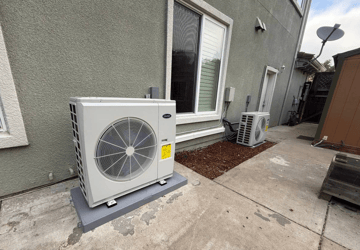
- Where the outdoor unit will sit. Local rules may govern distance from windows, property lines, or walkways.
- How refrigerant lines and wiring will be routed, and whether any will be visible.
- Where supply vents and returns will go.
- The electrical scope.
Occasionally this visit reveals something that changes the design or price, so expect an updated estimate if it does.
8. Scheduling (days to a few weeks). Heat pump installs are usually scheduled quickly, often within one to three weeks of signing, and sometimes sooner if a slot opens up. Heat waves, cold snaps, and busy seasons can push dates out.
9. Installation day(s) (2-6 days). Your heat will be off while the old furnace is removed, so plan accordingly in cold weather. The crew will need access to your attic or crawlspace, electrical panel, and the outdoor unit location. They'll typically:
- Remove the old equipment.
- Set the outdoor unit and install the indoor unit or air handler.
- Connect refrigerant lines, pressure-test them, and do any duct work.
- Hand off to an electrician to run the new circuit.
Before the crew leaves, do a walkthrough. Test both heating and cooling, even if it's a hot day and you won't need heat for months. Make sure your thermostat is set up, and ask how to change the filter.
AFTER: Inspection, settling in, and rebates (a few weeks to 6+ months)
Check out: I got a heat pump! Now what?
10. Testing and final inspection (2 weeks to 3 months). In California, replacing a furnace, AC, or heat pump typically requires a mechanical permit plus independent field verification of duct leakage, refrigerant charge, and airflow before the job can pass final inspection. That verification is done by a third-party rater, formerly called a HERS rater and now an ECC verifier. Your city inspector then signs off.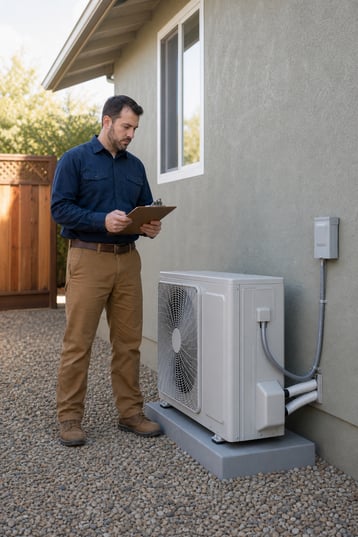
In other states, inspections and permit signoff may be required. Inspection wait times vary widely by jurisdiction - sometimes it can happen within days, other times it can take months. It's not unusual for an inspection to flag corrections, which your contractor handles before a re-inspection. Your system can run normally in the meantime.
11. Getting used to your heat pump (first few weeks to months). Heat pumps work differently from your previous heating system. Check out our guidance: I got a heat pump! Now what?
12. Rebates and paperwork (weeks to months). Ensure you add your paid, itemized invoice, your final permit, and photos of your old equipment to your QuitCarbon Home Profile. Contractor-filed rebates are submitted for you, while others you'll file yourself - your QuitCarbon Insights tell you which is which. If you qualify, claim your QuitCarbon Rebate once your project is complete.
Quick reference: Typical timeline for heat pump upgrades
| Stage | Typical time | What may make it take longer |
|---|---|---|
| Site visit | Within 1-2 weeks | Scheduling |
| Proposal | Same day – 1 week | Separate bids from subcontractors |
| Decision and signing | Days – weeks | Rebate questions, comparing options |
| Pre-installation Project Manager visit (this occurs only sometimes) | 1–2 weeks after signing | Design changes, scheduling |
| Installation | 2-6 days | Weather, complex ductwork |
| Inspection and permit sign-off | 2 weeks – 3 months | City backlog, corrections |
| Rebate processing | Weeks – months | Program backlogs, paperwork corrections |
💡Tips from QuitCarbon homeowner clients who've been there
- Ask QuitCarbon about your electrical panel, to avoid surprises once the heat pump installers arrive
- If you are utilizing rebates that offer reservations, confirm those reservations have been secured before installation starts - ask your installing contractor, and be sure to CC Hello@QuitCarbon.com
- Test the heating and cooling functions before the installation crew leaves.
- Be patient with permits and inspections - contractors cannot control the government employees who do this work, and these processes can take much longer than you might expect.
- Once you’ve paid in full for your upgrade, be sure to add your PAID invoice to your QuitCarbon Home Profile - you’ll need that for future rebate applications (like the exclusive QuitCarbon Rebate!)
- Always CC Hello@QuitCarbon.com on all emails with your contractor, with rebate providers, with inspectors, and anyone else involved with your heat pump upgrade - the more you include QuitCarbon, the more we can help!
Most of our clients tell us the first winter with a heat pump is a revelation: quieter, steadier, and more comfortable than their old heating system, with air conditioning as a bonus. We can't wait to help you experience the magic of a heat pump!