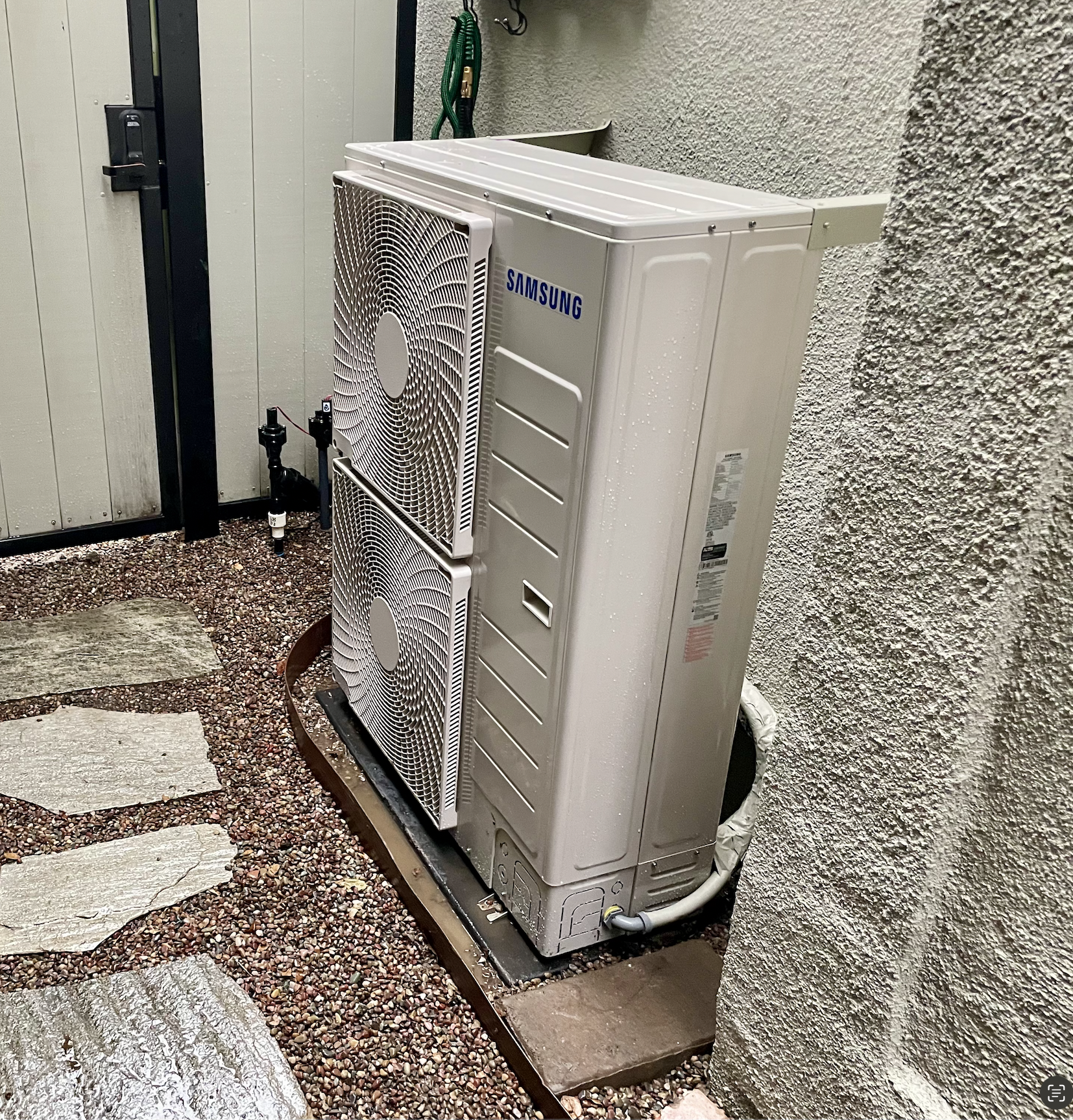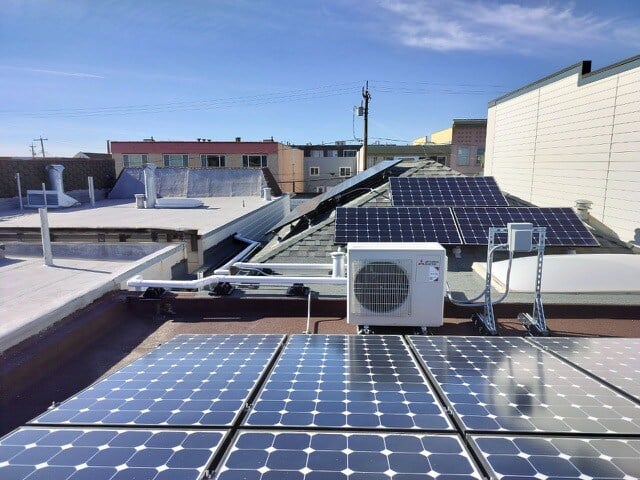

 When you upgrade to a heat pump, it is very important that the contractor install an accurately sized heat pump. An accurately sized heat pump:
- Heats and cools your home to comfortable temperatures on all days of the year.
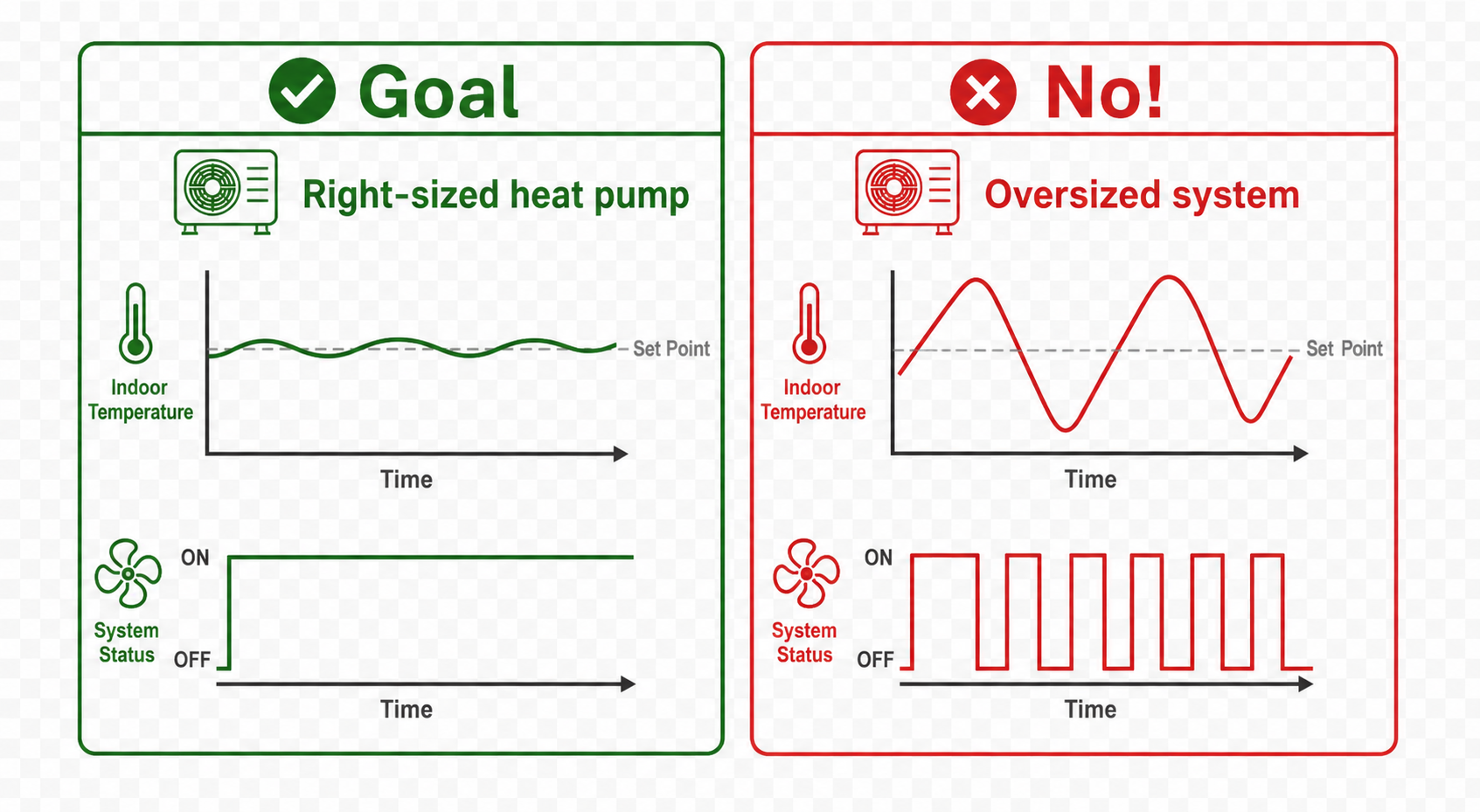
- Runs at low and slow speeds most of the time, which gives you both maximum efficiency and maximum comfort. Your home will maintain a comfortable temperature instead of having the blast-on, turn off cycle, you are likely used to with a gas furnace and typical air conditioning.
- Provides your ducts or mini-splits with the correct amount of airflow to make each area of your home comfortable.
Understandably, many homeowners are concerned that their heat pump may be too small, that it won’t heat and cool their home sufficiently. A more common concern in practice is that some contractors recommend oversized heat pumps that run inefficiently at higher speeds than necessary, and cycle on and off rather than maintain your desired temperature.
In summary, it is important to ensure your contractor recommends a heat pump that is appropriately sized for your home.
Across the HVAC industry, sizing is done in different ways. QuitCarbon recommends against contractors that use rules of thumb, such as those based on square footage. The typical industry best practice is a Manual J calculation, which takes into account the size of the spaces that need to be conditioned, weather conditions, home envelope, and other factors. Some contractors use proprietary techniques such as those based on your actual gas use, along with other factors. Other contractors may use back of the envelope calculations based on observable conditions, your experience in the home, and the heating/cooling/duct systems already in place. In all cases, QuitCarbon recommends that homeowners ask contractors to justify the recommended heat pump sizing.
The bottom line, a heat pump that fits your home is quieter, more comfortable, and cheaper to run than one that's too big or too small. Whether you live somewhere snowy, steamy, or mild, ask your contractor how they sized your system, and don't settle for a square-footage guess.
Ready to get started? Get your free QuitCarbon home upgrade plan.
Otherwise, read on for more detail about HVAC load calculations.
What is an HVAC load calculation?
An HVAC load calculation estimates how much heating and cooling your home needs to stay comfortable on a typical very cold winter day and a typical very hot summer day in your area. The result is expressed in BTUs per hour (BTU/h). The "load" is the amount of heat your home loses in winter and gains in summer, through walls, windows, the roof, the floor, air leaks, and ducts, plus heat from people, lights, and appliances.
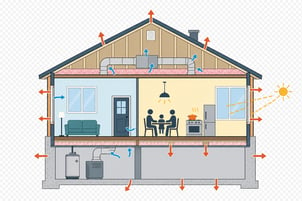 Think of it like a leaky bucket. In winter, heat is constantly leaking out of your home. A load calculation measures the size of the leaks so your heating system can pour heat in at the same rate, no faster and no slower. In summer it works the other way: heat leaks in, and your cooling system has to remove it.
Once you know your home's load, you can pick equipment that matches it. That's the goal: a system sized to your actual house, not to a guess.
Why does heat pump sizing matter so much?
Getting the size right affects comfort, energy bills, equipment life, and upfront cost. As we explain in our Complete Guide to Heat Pumps, an undersized unit may struggle to keep up, while an oversized unit can lead to inefficient operation and extra wear and tear.
Oversizing is the more common mistake. An oversized system tends to "short cycle," blasting on, quickly hitting the thermostat setting, shutting off, and repeating. That on-and-off pattern can create uneven temperatures, more noise, more wear, and poor moisture removal in summer. Heat pumps are designed to run longer and more gently than the oversized gas furnaces many homes have today. As we put it in I got a heat pump! Now what?, heat pumps are "efficient and 'slow,'" and your home is more comfortable when it's held at a steady temperature.
Oversizing also costs money twice: bigger equipment usually costs more to buy, and it can mean more electrical capacity, larger ducts, or a panel upgrade you might not have needed. If your home has limited electrical service, right-sizing can make a big difference. See I have 100 amps of main electrical service. Can I still electrify?
Can't a contractor just size my system by square footage?
Many HVAC systems in America have been sized with rules of thumb like "one ton of cooling per 500 square feet," or by simply matching the size of the old equipment. These shortcuts are fast, but they're often wrong, and they usually err on the big side.
Two homes with the same square footage can have very different loads. A well-insulated, airtight 2,000-square-foot home in a mild climate might need a fraction of the capacity of a drafty 2,000-square-foot home in Minnesota or Texas. Big windows facing west, a vaulted ceiling, a leaky attic, or ducts in a hot attic can all change the answer. Matching your old system's size is risky too: many existing furnaces and air conditioners are already oversized, and if you've added insulation or new windows since then, your home's needs have likely dropped.
Square footage can be a reasonable starting point for a rough budget estimate. But for choosing equipment, a load calculation based on your actual home is the better approach.
What is a Manual J?
Manual J is the industry-standard method for calculating residential heating and cooling loads. It's published by the Air Conditioning Contractors of America (ACCA) and is recognized by U.S. residential building codes. When an HVAC contractor or energy professional says they "ran a Manual J," they mean they calculated your home's loads using this method, almost always with specialized software.
A Manual J looks at your home in detail: where you live (and therefore your local "design temperatures," the hot and cold conditions the system should handle), which direction the house faces, square footage and ceiling heights, insulation levels, window sizes and types, how airtight the house is, where your ducts run, and how many people live there. A thorough Manual J is done room by room, which matters later for designing ducts and choosing where indoor units go.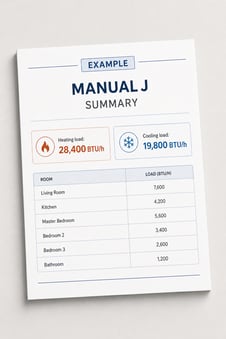
The result is a report showing your home's total heating load, its cooling load (split into "sensible" cooling, which lowers temperature, and "latent" cooling, which removes moisture), and the load of each room. That report is the foundation for choosing equipment (Manual S) and designing ducts (Manual D), which are covered below.
Do I need a Manual J?
In most cases where you're installing or replacing a central heating or cooling system, a Manual J (or an equivalent load calculation) is a good idea, and often it's required. U.S. model residential building codes call for heating and cooling equipment to be sized based on loads calculated with Manual J or an equivalent method, and many local building departments ask for one with an HVAC permit. Requirements and enforcement vary widely by state and city, so check with your contractor or local building department about what applies to you.
A load calculation is especially valuable if you're switching from a furnace to a heat pump, adding or removing ductwork, going "all-electric" and removing gas backup, have made efficiency upgrades since your last system was installed, have rooms that are always too hot or too cold, or live in a very cold or very humid climate. Some rebate programs also depend on proper sizing. For example, one California incentive listed on our rebates page requires that the heat pump be sized to meet your home's full heating load without relying on electric resistance backup heat.
A full Manual J may matter less for very small projects, like adding a single ductless mini-split to one room or replacing a window AC. Even then, a good contractor should still think through the room's needs instead of just picking the biggest unit that fits.
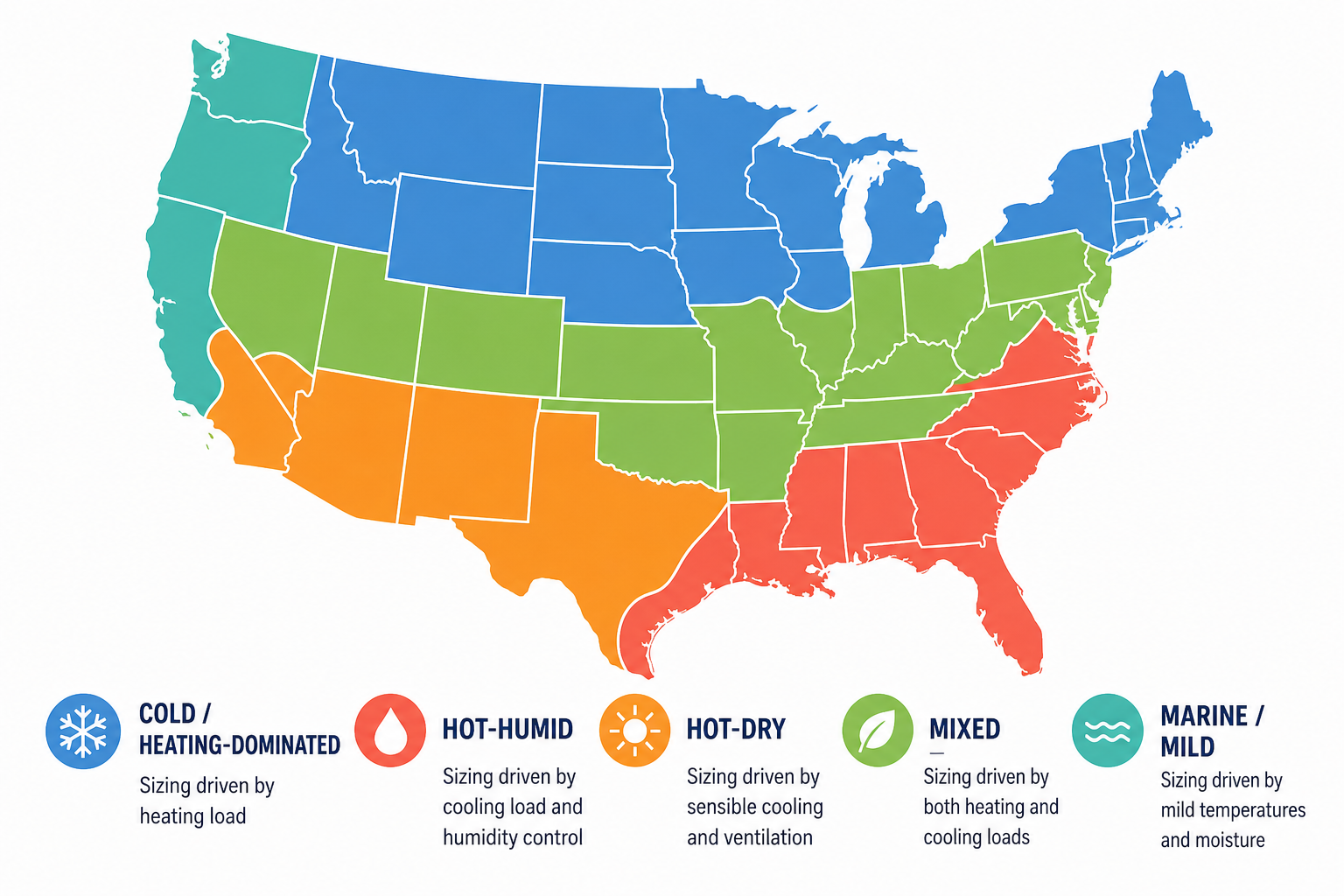
What if I live in a cold, heating-dominated climate?
In places with long, cold winters, like the Northeast, upper Midwest, Mountain West, and Alaska, the heating load usually drives the sizing decision. The key questions are how much heat your home loses on a design-cold day and whether the heat pump you're considering can deliver that much heat at that temperature. Heat pumps lose some capacity as it gets colder outside, so a contractor should look at the equipment's rated output at your local design temperature, not just its nameplate size.
Modern cold-climate heat pumps can keep homes warm well below freezing. Our article Are Heat Pumps Effective in Cold Weather? explains how today's systems handle winter. A Manual J helps you decide whether a heat pump alone can cover your coldest days, or whether you want a backup like electric resistance heat strips or, in some cases, keeping an existing furnace for the coldest hours. It also shows how much an air sealing or insulation project could shrink the heat pump you need.
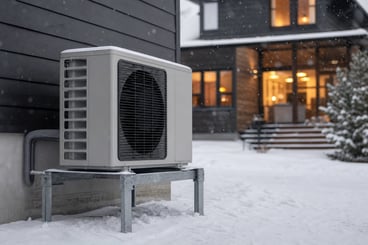 In cold climates, sizing to the heating load sometimes means the system is larger than you'd need for summer cooling. Variable-speed (inverter) heat pumps help a lot here, because they can slow down to match milder days instead of short cycling. If you're converting from oil or propane, see Use a Heat Pump to Switch From Oil to Electric Heat.
What if I live in a hot, humid climate?
In hot, humid places like the Southeast, Gulf Coast, and parts of the mid-Atlantic, summer cooling and moisture removal often drive the decision. Here, Manual J's split between sensible load (temperature) and latent load (humidity) is especially important. A system can bring the temperature down and still leave the house feeling damp and sticky if it isn't removing enough moisture.
Oversizing is a big problem in humid climates. As we explain in What's Causing High Humidity in Your Home?, an oversized system cools the air so quickly that it shuts off before it has time to dehumidify. Right-sized, variable-speed heat pumps run longer at lower speeds, which pulls more moisture out of the air. Many also offer a "dry" mode. See Beyond Humidity: The Multifaceted Benefits of Air-Source Heat Pumps.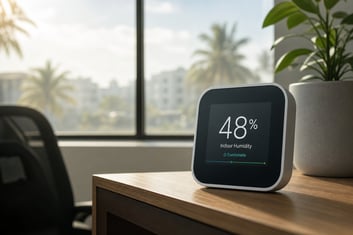
A good load calculation in a humid climate also accounts for air leaks and ducts in hot attics or crawlspaces, which bring in heat and moisture. Sealing those leaks can reduce both your cooling load and your humidity problems, so it's worth asking about before you pick a system size.
What about mild or mixed climates?
In mild climates like coastal California and much of the Pacific Northwest, both heating and cooling loads can be small. That makes oversizing even easier, because even the smallest standard systems may be bigger than the home needs. A load calculation helps you avoid paying for capacity you'll never use, and can point toward options like smaller ducted units, ductless mini-splits, or zoning.
In mixed climates with real winters and real summers, a Manual J shows which season drives the sizing for your specific home. Your contractor can then pick equipment that handles both, ideally a variable-speed heat pump that can adjust its output. For more on what to expect in California specifically, see Heat Pumps in California: Everything You Need to Know.
How do I get a Manual J calculation?
The most common way is through your HVAC contractor. Many contractors who install heat pumps run a Manual J as part of their estimate or design process, especially when a permit or rebate requires it. When you're collecting bids, ask each contractor directly: "Will you do a room-by-room Manual J for my home, and can I get a copy of the report?" A contractor who sizes systems carefully should be happy to say yes.
To help whoever does your calculation, gather what you know about your home: its age and square footage, any insulation, window, or air sealing upgrades, photos of your existing equipment and nameplates (see What photos do you need of my home?), and notes on any rooms that are always too hot or too cold. Your past energy bills can also be a useful reality check on how much heat your home actually uses. Learn how we use them in How does QuitCarbon estimate my appliances' gas usage?
Ready to get started? Get your free QuitCarbon home upgrade plan.